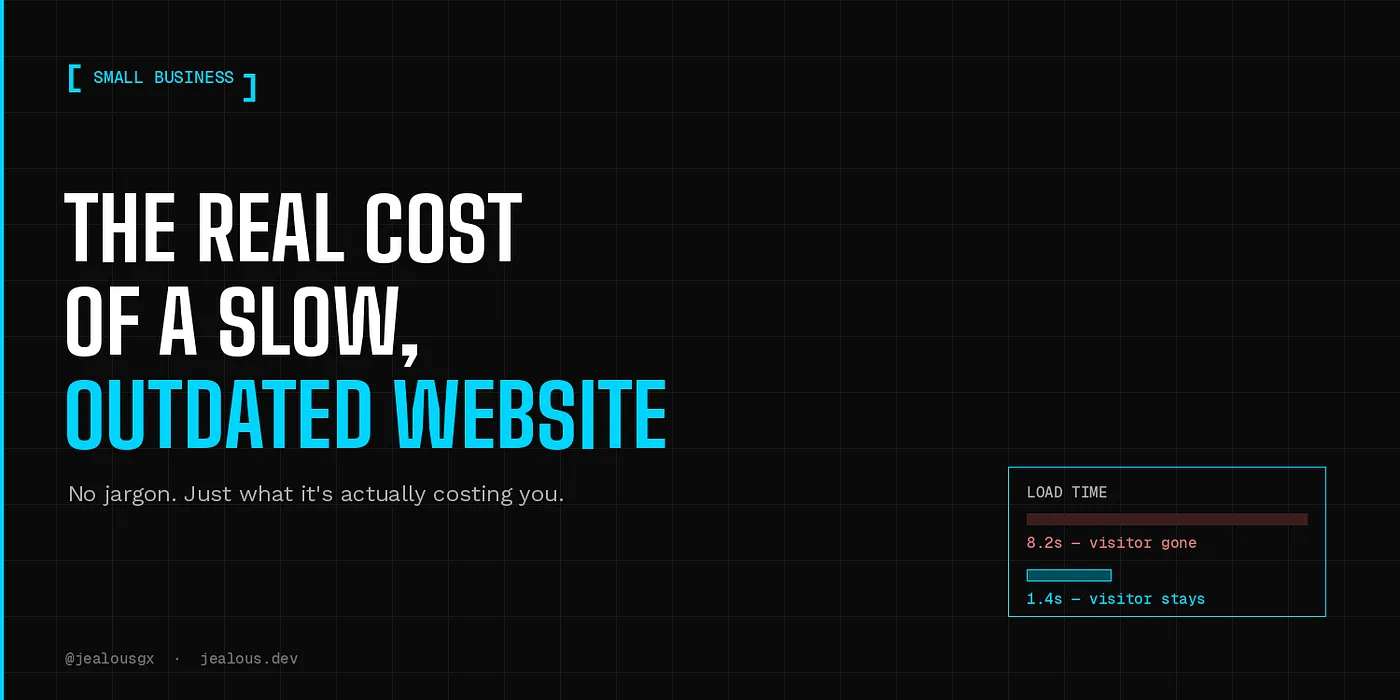
If your website takes more than a few seconds to load, some of your visitors are already gone. They didn't read your homepage. They didn't see your prices. They didn't even give you a chance, they just left.
That's not a technical problem. That's a sales problem. And it's costing you money every single day, quietly, without ever showing up as a complaint.
Why This Happens
Here's the thing about a slow website: nobody tells you it's slow. Your customers don't send you an email saying "hey, your site took forever to load so I went to your competitor instead." They just... leave. Silently. You never even know they were there.
You only see the people who stuck around. You never see the ones who didn't.
What "Slow" Actually Costs You
Think about the last time you were shopping online and a site took too long to load. What did you do? Most people don't wait. They hit back and try the next option.
That's exactly what's happening on your site right now, to people you never get to meet. Every slow page load is a potential customer who quietly picked someone else, not because that someone else was better, but because they loaded faster.
It's not just about losing that one visit either. A slow, outdated website also does something worse over time: it makes your business look outdated. Even if your work is excellent, even if your prices are fair, a website that feels stuck in the past makes people wonder if the business behind it is too.
It's Not Just Speed
Speed is the most obvious symptom, but it's usually not the only issue. If your website is slow, it's often also:
- Hard to use on a phone: and most of your visitors are on their phones
- Confusing to navigate: visitors can't find what they came for
- Missing basic information: hours, pricing, contact details buried or absent
- Not showing up in search: slow sites tend to rank worse on Google too
These things compound. A slow site isn't just annoying, it's usually a sign of a website that hasn't been touched in years, built for a different time, before most of your customers were browsing on their phones during a five-minute break.
What This Actually Means for Your Business
You're spending money and effort to get people to notice your business, ads, word of mouth, social media, whatever it is. All of that effort is pointing people toward your website. If the website itself is the reason they leave, everything upstream of it is being wasted.
A slow website isn't a small annoyance. It's a leak in the exact place where interest is supposed to turn into a customer.
The Good News
This is fixable. Not with a total rebuild, not necessarily with a huge budget, usually with focused, specific fixes: making pages load faster, making the site work properly on phones, making the important information easy to find. The kind of work that doesn't take months, just needs someone who knows where to actually look.
Your business doesn't need a flashy new website. It needs one that doesn't quietly cost you customers before they even get a chance to see what you do.
If your site feels slow or outdated and you're not sure why, I'll take a look and tell you honestly what's going on, no jargon, no upsell. Get in touch.